Skip to content

Mastitis: Rapid Evidence Review

di Dr.ssa Erin F. Morcomb, Dr.ssa Carmen M. Dargel, Dr.ssa Sydney A. Anderson • February 2026
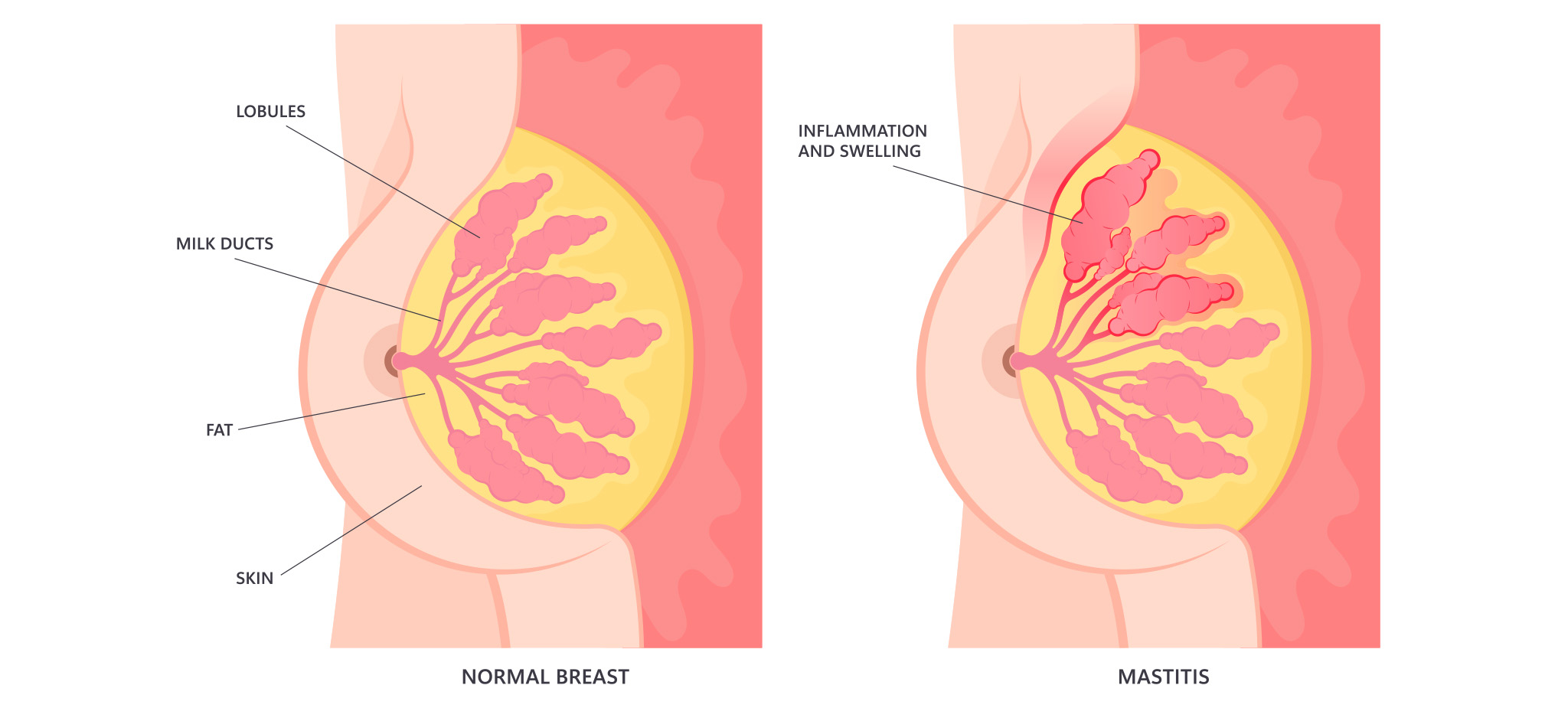
Mastitis represents a spectrum of inflammatory conditions. Lactational mastitis is the most common, with an approximate incidence of 10% in the United States, and it usually occurs in the first 3 months postpartum. Diagnosis is made clinically based on the presence of symptoms such as fever, malaise, focal breast tenderness, and overlying skin erythema or hyperpigmentation without the need for laboratory tests or imaging. However, obtaining milk cultures should be considered to guide antibiotic therapy, and ultrasonography should be performed to identify abscesses in immunocompromised patients or those with worsening or recurrent symptoms. Because most cases of mastitis are caused by inflammation and not a true infection, a 1- to 2-day trial of conservative measures (i.e., nonsteroidal anti-inflammatory drugs, ice application, feeding the infant directly from the breast, and minimizing pumping) is often sufficient for treatment. If there is no improvement in symptoms, narrow-spectrum antibiotics may be prescribed to cover common skin flora (e.g., Staphylococcus, Streptococcus). Most patients can be treated as outpatients with oral antibiotics; however, if the condition worsens or there is a concern for sepsis, intravenous antibiotics and hospital admission may be required. Use of probiotics for treatment or prevention is not supported by good evidence. Factors that increase the risk of mastitis include overstimulation of milk production and tissue trauma from aggressive breast massage; therefore, frequent overfeeding, excessive pumping to empty the breast, heat application, and breast massage are no longer recommended because they may worsen the condition. The best prevention is a proper lactation technique, including a good infant latch, and encouraging physiologic breastfeeding rather than pumping, if possible.

(Am Fam Physician. 2024:110(2):174-182. Copyright © 2024 American Academy of Family Physicians).
Related Articles

Screening del carcinoma della cervice uterina

Screening del carcinoma della cervice uterina

di
Dr.ssa Amy Wiser, Dr. Jeffrey D. Quinlan
June 2026

Highlights

Fondazione Menarini, Centro Direzionale Milanofiori 20089 Rozzano (MI) – Edificio N – Strada 8
Tel. +39 02 55308110 Fax +39 02 55305739 C.F. 94265730484 – Reg. Trib. Fi. n. 2589 del 16/6/1977 

Iscriviti per accedere ai contenuti digitali

LOGIN

Puoi accedere al sito di Minuti Digitale con le stesse credenziali dell’area riservata del sito di Fondazione Internazionale Menarini

non sei ancora registrato? premi QUI per iniziare

hai dimenticato la tua password? resetta la password

Ricerca Edizione

Search Edition:

SIGN UP FOR FREE ACCESS TO THE DIGITAL CONTENT

LOGIN

You can access the Minuti Digitale website with the same credentials as those used for registering on the Fondazione Internazionale Menarini website

not registered? click here

forgot your password? reset your password

INSCRÍBASE PARA ACCEDER A LOS CONTENIDOS DIGITALES

LOGIN

Puede acceder al sitio de Minuti Digitale con las mismas credenciales del área reservada del sitio de la Fondazione Internazionale Menarini

no estas registrado? premi QUI

Olvidaste tu contraseña? restablecer la contraseña

Reset Password

Inserisci il tuo indirizzo email per ottenere un link di reset password.


Effettuerai il reset sul sito di Fondazione Menarini e potrai successivamente effettuare il login su Minuti con le stesse credenziali.

Reset Password

Enter your email address to obtain a password resetting link.


After performing the resetting on the Fondazione Menarini website, you can then log in to Minuti with the same credentials.

Reset Password

Introduzca su dirección de correo electrónico para obtener el enlace para restablecer su contraseña.


Llevará a cabo el restablecimiento en el sitio de la Fondazione Menarini y luego podrá iniciar sesión en Minuti con las mismas credenciales.

error: Download disabled!